
One of the biggest misconceptions in dog ownership is the belief that the more dogs your puppy or adult dog meets, the better socialized they will become. While this sounds logical, it is unfortunately not true. Socialization is not about exposing your dog to as many dogs as possible—it is about creating quality experiences with the right dogs. Dogs, just like humans, are shaped by those around them. The dogs your dog spends time with will influence their behavior, confidence, communication skills, and overall demeanor. This is why it is so important to be intentional about who your dog socializes with regardless of age or breed.
If your dog is naturally anxious or insecure, allowing them to spend time around another anxious or unstable dog will often reinforce those behaviors rather than improve them. Anxiety feeds anxiety. Instead, your goal should be to expose your dog to calm, balanced dogs that model confidence and neutrality. A stable dog teaches your dog that it is possible to exist in public, around distractions, and around other animals without becoming overstimulated, fearful, or chaotic. Dogs learn by observation, and the behaviors they see repeatedly often become the behaviors they mirror. Tap into that pack mentality!
We often tell our clients that it is not about how many dogs your dog meets, but rather the quality of those dogs and the behaviors they display. For example; My dog Atlas was raised by one dog only. That dog taught him how to come out of his shell, play with him and also nap. He also corrected my puppy when it was appropriate and now my dog is able to do the same for all the puppies we train. It is completely okay if your dog only spends time with one or two carefully selected dogs that consistently demonstrate healthy behavior. In fact, this kind of intentional exposure will create a far more well-rounded dog than allowing them to interact with every random dog they encounter. Too many owners feel pressure to let their dog greet every dog they see or believe their puppy needs constant social interaction to develop properly. In reality, thoughtful and controlled experiences are far more beneficial than endless exposure. This will also set you up for better success against behaviors like reactivity.
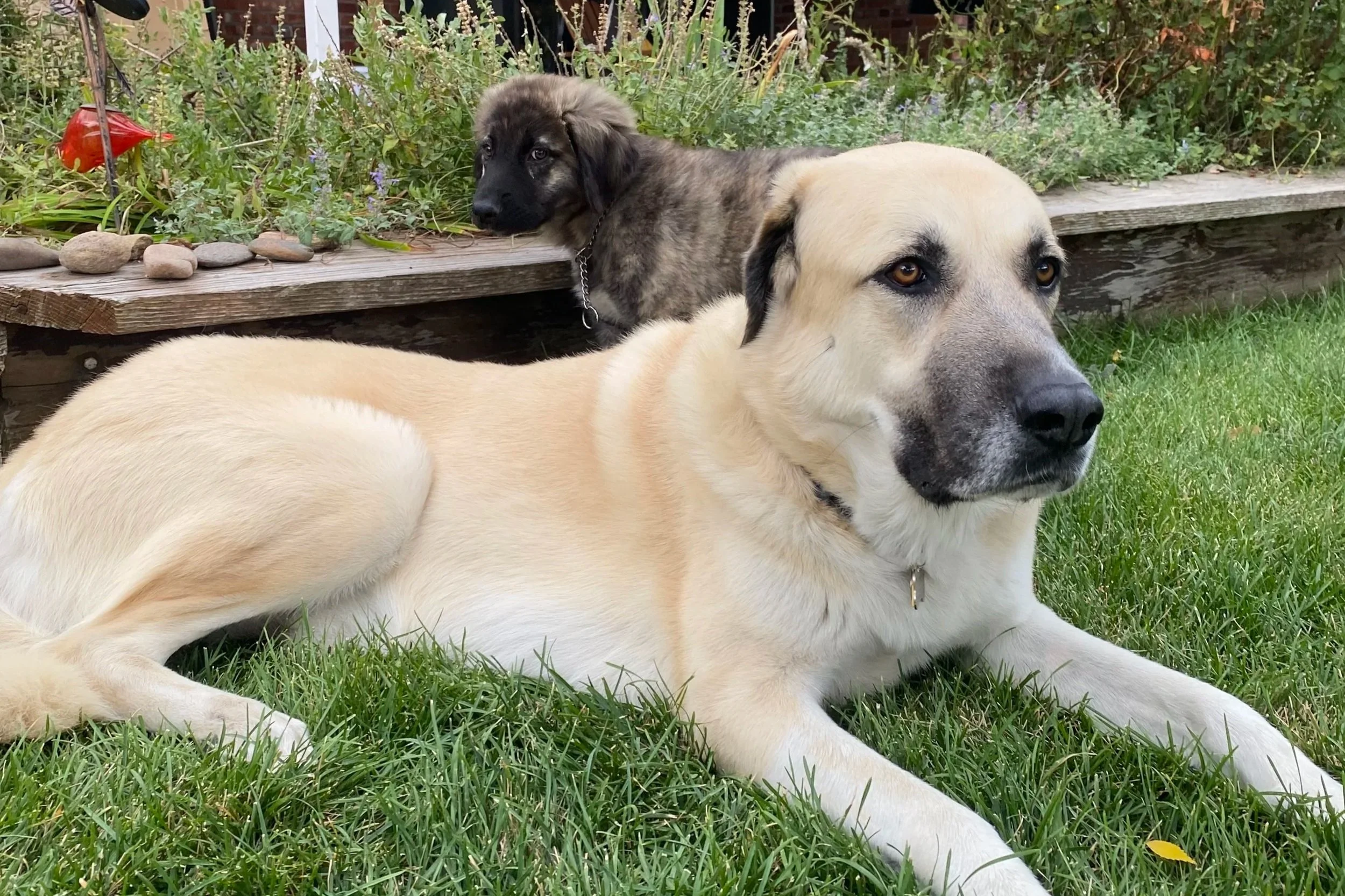
Atlas (9weeks) with his mentor Ringo.
This becomes even more important when raising a puppy. From the moment you bring your puppy home, socialization begins. The critical socialization window typically falls between 8 and 12 weeks of age, which is also when puppies can enter fear imprint periods. During this time, experiences—both positive and negative—leave a lasting impact. This is why being intentional with your puppy’s environment matters so much. The goal is not to overwhelm them with as many new experiences as possible. The goal is to create calm, positive, and controlled scenarios that build confidence.
Because of this, there are certain situations we recommend avoiding during those early weeks. Loud stores, chaotic events, large crowds of strangers rushing to pet your puppy, oversized puppy socialization classes, public dog parks, and interactions with random adult dogs all carry unnecessary risk. While some of these situations may turn out fine, why gamble during such an important developmental period? Overexposure can teach your puppy that every outing means being touched by strangers they may not trust, being overwhelmed by sounds they cannot process, getting sick from contaminated environments, or worse, being attacked by an unstable dog because someone confidently assured you that their dog “loves puppies.” Unfortunately, many people misunderstand their own dog’s behavior, and your puppy could pay the price for that mistake.
If you have the resources, one of the best things you can do is seek out balanced “mentor dogs.” These are calm, stable dogs that are gentle but capable of appropriate correction when necessary. Balanced dogs teach puppies invaluable social lessons: how to regulate excitement, respect boundaries, read body language, and interact appropriately. These dogs are neither pushovers nor bullies. They know how to communicate clearly and fairly. I was fortunate enough to have access to two large male dogs that were beautifully balanced around puppies, and their influence helped shape my own dog into the stable mentor dog he is today. This kind of guidance is incredibly valuable and often impossible to replicate in chaotic group settings.
When introducing dogs, body language tells us everything. There are certain red flags we watch for, such as intense fixation, stiff posture, raised hackles, rigid tail wagging, or hyper-focused energy. Sometimes these signals do not lead to conflict, but they indicate rising arousal and should always be approached with caution. On the other hand, healthy social behavior looks loose and wiggly. Dogs should appear soft and relaxed, with low or side-to-side tail wagging, play bows, rolling onto their side or back, and an ability to adjust their energy based on the other dog’s communication. Healthy play is a conversation. Both dogs should be reading and responding to one another.
One of our favorite things to see, especially when a large dog is interacting with a puppy or smaller dog, is what we call handicapping. This is when the larger dog intentionally lowers themselves to the smaller dog’s level, takes turns being on the ground, and allows the smaller dog to “win” portions of the interaction. This is healthy, balanced play. It shows self-awareness, emotional regulation, and social intelligence. Taking turns matters. Dogs that constantly overpower, pin, or dominate another dog without allowing that give-and-take are often displaying unstable play that can eventually escalate into conflict.
It is also important to remember that not all dogs play the same way. Different breeds often have natural play styles rooted in the jobs they were originally bred to do. Dobermans, for example, are often loud and mouthy during play. Bully breeds can look intense and rough even when they are being perfectly appropriate. Golden Retrievers may be more interested in carrying a ball or rolling in the grass, while terriers often enjoy tugging, grabbing, and shaking. Some dogs are chasers, some love to be chased, some are wrestlers, and others prefer lower-energy interaction. Knowing what your dog was naturally bred to do helps you better understand their play style and set realistic expectations.
At the end of the day, we all want the same thing for our dogs. We want to see them confidently running, playing, exploring, and thriving. That kind of confidence does not come from meeting every dog they see. It comes from intentional experiences with the right dogs—the ones that help shape them into the balanced companions we hope they become.
If you are currently seeking help or guidance with your dog’s socialization, reach out to local dog trainers, do your research, and never be afraid to ask questions. Just like dogs, every trainer has a different teaching style, philosophy, and approach to behavior. It is important to find someone you feel comfortable with. Someone whose methods align with your values, your goals for your dog, and the way you learn best. The right trainer should not only help your dog grow, but should also empower you with the knowledge and confidence to better understand your dog and advocate for what they need.
Thank you for reading our blog - The K9s Virtue.